
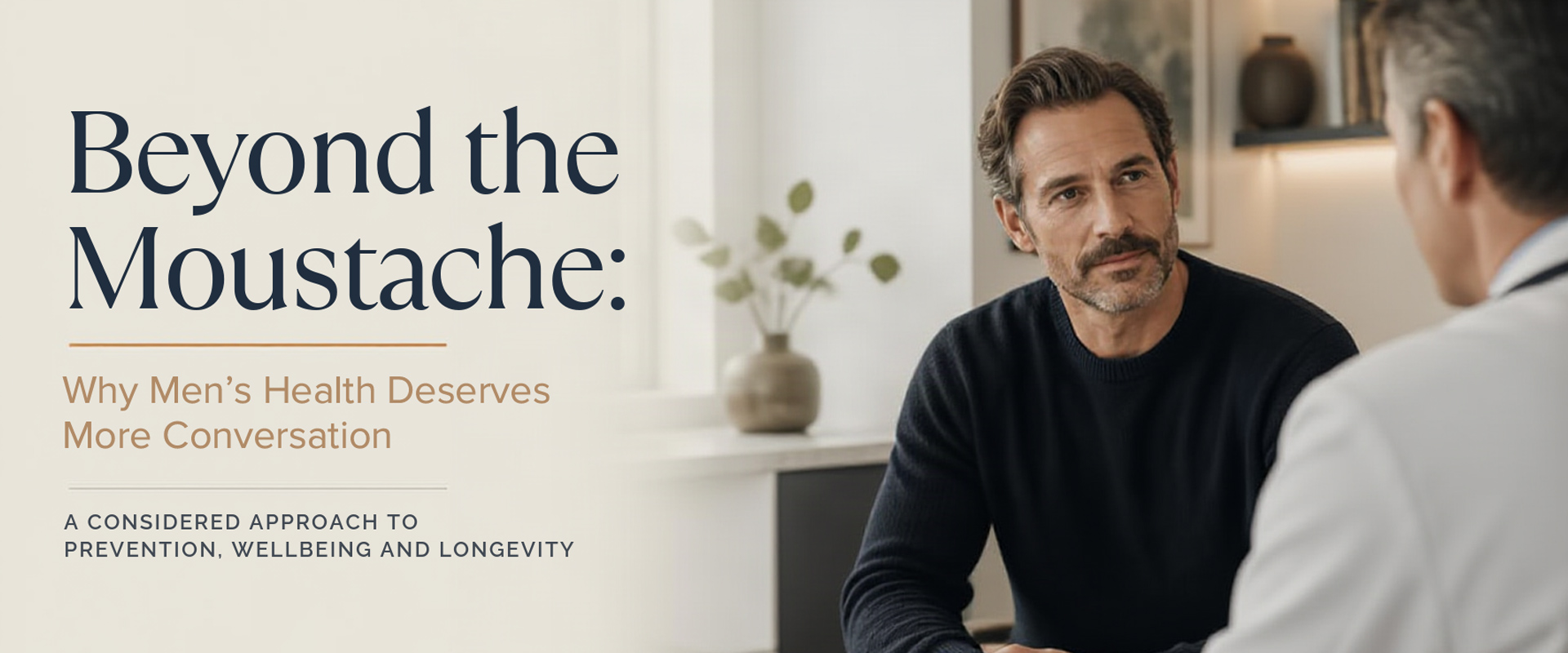
Beyond the Moustache: Why Men’s Health Deserves More Conversation
Movember: Men’s Health Awareness Month
By Dr Sera Shoukru, Private GP and Men’s Health Specialist, The Marylebone Practice
Every November, moustaches appear everywhere. Some are impressive, some questionable, but all have the potential to begin an important conversation.
Movember began in Australia in 2003, when a group of friends challenged one another to grow moustaches. What started as a light-hearted idea became a global movement raising awareness of prostate cancer, testicular cancer, mental health and suicide prevention.
Yet beyond the moustache lies a bigger question: are we doing enough to make men’s health easier to discuss?
Why conversations matter
As a private GP specialising in men’s health, I believe one of the most valuable things we can offer men is the opportunity to have an open, unhurried conversation about their physical and psychological wellbeing.
Many men are comfortable discussing fitness, exercise and performance. Conversations about bowel habits, urinary symptoms, sexual health, changing libido, emotional wellbeing or family pressures can feel considerably more difficult. That does not mean these subjects are unimportant. It means they deserve a thoughtful setting in which they can be explored without embarrassment or judgement.
Sometimes symptoms are dismissed as part of getting older. Sometimes men are balancing careers, relationships, parenthood and responsibilities, and simply do not prioritise themselves. Understanding your health, however, should not begin only when something goes wrong.
A considered approach
Good healthcare is not about rushing to a label or testing for everything. It is about listening carefully, understanding the individual and deciding together what deserves attention.
Prevention and individualised screening
A GP appointment is not simply an opportunity to investigate illness. It can also create time to assess cardiovascular risk, discuss family medical history, review blood pressure and cholesterol, consider diabetes risk, and talk through weight, sleep and lifestyle.
Opportunistic health checks can make room for conversations that might otherwise never happen. The aim is not to test everyone for everything. It is to ensure that screening and investigation are individualised, evidence-led and relevant to the person in front of you.
Topics that may deserve attention include:
-
Prostate health — urinary symptoms, family history and individual risk should be discussed. PSA testing may be appropriate, but it requires an informed conversation about its benefits and limitations.
-
Bowel health — changes in bowel habit, rectal bleeding or unexplained weight loss should never be ignored. Bowel screening is an important part of preventive healthcare.
-
Testicular health — men should become familiar with what is normal for them and seek assessment of any new lump, swelling or change.
-
Cardiovascular and metabolic health— blood pressure, cholesterol, diabetes risk, abdominal weight and lifestyle deserve attention long before symptoms develop.
-
Sexual and hormonal health — erectile difficulties, changes in libido, fatigue and reduced physical performance are legitimate medical concerns, not subjects to avoid.
Hormonal change and the changing male body
We increasingly talk about hormonal transitions in women, but how often do we discuss hormonal and metabolic changes in men?
The terms andropause and manopause have become popular, although they can be misleading. Unlike the female menopause, men do not usually experience a sudden, universal hormonal transition.
Nevertheless, some men experience changes in testosterone levels, body composition, muscle strength, energy, mood, sexual function and sleep as they age. Not all these symptoms are caused by testosterone deficiency. Stress, poor sleep, alcohol, medication, metabolic health and other medical conditions may also play a role.
The important message is that changes in how a man feels or functions deserve proper assessment rather than being dismissed as inevitable ageing. A careful consultation can consider the wider picture without overmedicalising normal change or assuming that one explanation fits everyone.
Men’s mental health is men’s health
Men’s mental health remains one of the most pressing issues in preventive healthcare. In England and Wales, men account for approximately three-quarters of registered suicide deaths. The figure is deeply concerning, particularly among men in middle age.
Research also suggests that some men are less likely to disclose emotional difficulties or seek psychological support. But we should be careful not to assume that men simply refuse help. Many do reach out, sometimes through their GP or other services, without necessarily identifying what they are experiencing as a mental health concern.
Work pressures, financial worries, relationship breakdown, fatherhood, caring responsibilities, bereavement, alcohol use and feelings of isolation can all influence wellbeing. In a consultation, poor sleep, exhaustion, irritability or declining motivation may provide a way into deeper concerns.
We need to create environments in which men feel comfortable sharing those concerns, without embarrassment or judgement. Mental health is men’s health. It deserves the same attention as blood pressure, cholesterol or prostate health.
Lifestyle, longevity and quality of life
Good health is not built around a single blood test, supplement or screening appointment. Regular exercise, cardiovascular fitness, resistance training, balanced nutrition, adequate sleep and sensible alcohol consumption are fundamental to maintaining health through the decades.
Maintaining muscle mass, protecting cardiovascular and metabolic health, managing weight and supporting psychological resilience become increasingly important as men age. Small, sustainable changes can make an enormous difference over time.
Longevity is about more than living longer. It is about preserving energy, independence, physical capability, relationships and quality of life. That broader perspective can make looking after yourself feel less like a duty and more like an investment in the life you want to lead.
Let’s make men’s health a conversation, not a crisis
Movember offers an opportunity to challenge the idea that men should simply get on with things. There should be no embarrassment in asking questions, seeking reassurance or taking a proactive approach to health.
Be curious about your health. Know your risks. Ask questions. Start the conversation.
You do not need to be unwell to see your GP, and you certainly do not need to grow a moustache. This article is intended to encourage informed conversations, not to replace personalised medical advice.
Take Charge of Your Health
Your health deserves attention at every stage of life. Whether you have a specific concern or simply want to take a proactive approach to your wellbeing, our team is here to help.
At The Marylebone Practice, our dedicated Men’s Health service provides personalised care to help you address your health concerns and take a proactive approach to your wellbeing.
Book your appointment
The Marylebone Practice
5 Devonshire Place, London, W1G 6HL
0203 026 3881
office@themarylebonepractice.com