
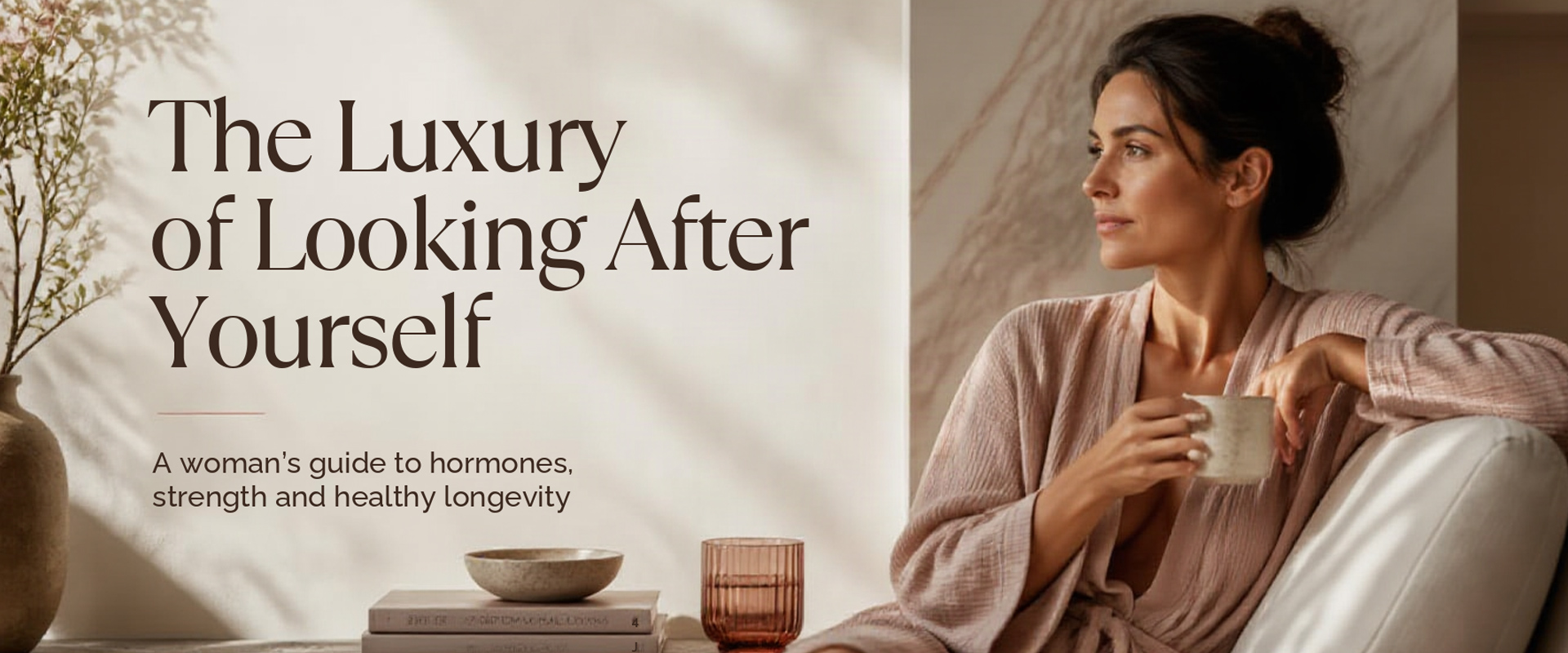
The Long View: Caring for Women’s Health Through Every Chapter
Hormones, strength and the quiet work of healthy longevity
There is no single moment when women’s health begins to matter—and no age at which it becomes too late to pay attention. From the first menstrual cycle through contraception, pregnancy, postnatal recovery, perimenopause and menopause, the body is continually adapting.
Those changes deserve more than a conversation about symptoms alone. A thoughtful approach considers hormones alongside movement, nourishment, sleep, metabolic wellbeing and the confidence to ask for help. This is not about pursuing an ideal body or postponing ageing. It is about building the strength, comfort and independence to live well in the years ahead.
The long view
Healthy longevity is not simply about adding years to life. It is about protecting the physical capacity, emotional wellbeing and sense of self that help those years feel fully lived.
Hormonal health is not a single season
Hormones are often discussed as though they belong to one particular chapter, usually menopause. In reality, hormonal health accompanies us throughout life. Menstrual cycles, contraception, pregnancy, breastfeeding, postnatal recovery and the menopause transition each bring their own physical and emotional landscape.
Hormones can influence far more than reproductive health. Oestrogen, for example, has an important role in maintaining bone strength, while hormonal shifts can affect muscle, fat distribution, sleep, metabolism, mood, skin and sexual wellbeing. The experience may be obvious or almost imperceptible; it may pass quickly or remain part of a longer pattern.
Seeing these changes in context can make health decisions feel less reactive. A change in sleep may belong in a wider conversation about perimenopause, stress or another medical issue. A shift in mood, libido or energy may deserve attention rather than dismissal. Understanding the possible connections does not mean assuming every symptom is hormonal—it means creating space for proper assessment.
Medical treatment can be an important part of that picture. HRT may be appropriate for some women, while contraception or treatment for an endocrine condition may be relevant at another stage. These decisions are personal and should be discussed with a qualified clinician. Treatment and prevention are not opposing ideas; they can sit alongside the everyday foundations that support health at any age.
-
Notice patterns — changes in sleep, mood, energy or physical comfort may be useful to record and discuss.
-
Keep the whole picture in view — reproductive health, bone health, cardiovascular and metabolic risk all form part of women’s wellbeing.
Strength is a long-term asset
Exercise is often framed around fitness, appearance or weight management. Its deeper value is more enduring: movement helps us preserve the strength and function that make everyday life feel easier and more independent.
Around menopause, bone density can begin to decline more rapidly as oestrogen levels fall. Muscle mass and strength also tend to reduce with age. This does not call for an abrupt transformation or an unforgiving routine. It calls for a relationship with movement that can be sustained through changing seasons of life.
Resistance training with weights, bands or body-weight exercises supports muscle and function. Walking, dancing and other weight-bearing activities contribute to bone health. Balance, mobility and cardiovascular exercise also have a place, but the most valuable plan is one that feels realistic enough to continue.
There is a quiet confidence in being able to lift, carry, climb stairs, get up from the floor and move through the day without fear. Preserving those abilities is a form of future planning—one that is practical, empowering and available in small increments.
A considered starting point
Aim to include some form of strengthening a couple of times a week, remain active in ways you enjoy and build gradually around your current health and experience. If pain, illness or uncertainty is present, seek personalised guidance before changing your routine.
The same principle applies to nutrition. Adequate protein supports the maintenance of muscle, while calcium and vitamin D have important roles in bone health. These are not isolated menopause concerns; they are part of a longer investment in physical capability.
Let nourishment evolve with you
Our nutritional needs are not fixed. Iron may be particularly relevant during years of heavy menstrual bleeding. Pregnancy and breastfeeding bring different demands. Later in life, sufficient protein, calcium and vitamin D become increasingly important to help preserve muscle and bone health.
A varied, Mediterranean-style pattern offers a generous foundation: vegetables in abundance, fibre, healthy fats and good-quality sources of protein. It is less about perfection than about creating meals that are satisfying, diverse and supportive of the body’s changing requirements.
The language of wellness can make nutrition feel surprisingly complicated. Shelves are full of products promising hormonal balance, renewed energy or effortless transformation. Some supplements have a legitimate place, particularly when a deficiency or specific nutritional need has been identified. But a compelling label is not the same as a personalised reason to take something.
Before reaching for a product, it may be more useful to ask a quieter set of questions: What am I eating regularly? How do I feel after meals? Is my appetite changing? Could an underlying deficiency or medical issue be contributing to the way I feel? These questions can lead to a more grounded conversation with a clinician or appropriately qualified professional.
-
Build variety — include vegetables, fibre, healthy fats and quality protein across the week.
-
Match the stage — consider how menstruation, pregnancy, breastfeeding, perimenopause and later life may alter requirements.
-
Question the promise — let identified needs and sound advice, rather than marketing, guide supplement decisions.
Rest, rhythm and metabolic wellbeing
Sleep can become unsettled at many points in a woman’s life. Pregnancy, the postnatal period and perimenopause may all bring disrupted nights, while work, caring responsibilities and emotional strain can add their own weight. When sleep is poor, energy, appetite, mood and concentration may all feel less steady.
The cause matters. A symptom may be connected with hormonal change, lifestyle, stress or another medical condition, and these possibilities can overlap. Rather than treating exhaustion as a personal failing, it is worth considering what has changed and whether support or assessment is needed.
Alcohol also deserves an honest, unalarming place in the conversation. Even modest drinking can disturb sleep, and alcohol consumption is associated with an increased risk of breast cancer. Excess body fat is linked to several cancers, including breast cancer after menopause and endometrial cancer. These are important health considerations, but they need not become a source of shame.
The aim is not a life stripped of pleasure or governed by restrictive rules. It is to understand how ordinary patterns accumulate over time, then choose changes that feel both meaningful and humane.
-
Consider regular alcohol-free days and notice how your sleep responds.
-
Protect a consistent opportunity for rest, even when perfect sleep is not possible.
-
Support muscle, movement and a healthy weight without pursuing punitive diets.
-
Discuss persistent fatigue, sleep disruption or other life-limiting symptoms with a qualified clinician.
Bring the quieter symptoms into the room
Not every important change announces itself with a hot flush or an altered menstrual cycle. Vaginal dryness, painful intercourse, pelvic discomfort, changes in libido, skin or hair, shifts in mood and a loss of confidence can all affect quality of life. Some may follow childbirth or occur during breastfeeding; others may be linked with contraception, perimenopause or a separate medical issue.
These experiences are often the least discussed, perhaps because they feel intimate or because women have been taught to accept them as inevitable. They should not have to be endured in silence. Persistent pain, sexual discomfort or a change that limits daily life deserves proper assessment. There may be effective treatments and supportive measures, but the first step is being able to describe what is happening.
In my work as a British Menopause Society-trained GP, with a longstanding specialist interest in nutrition, exercise medicine and women’s health, I see the value of combining medical care with a broader preventative approach. HRT, contraception and treatment of endocrine conditions may be important for some women. Alongside these, it is worth considering mental health, bone health, cardiovascular and metabolic risk, nutrition, sleep and physical activity.
This wider view is not an attempt to make women responsible for controlling every variable. It is an invitation to receive care that reflects the whole person, rather than reducing her health to a hormone level or a single life stage.
A question worth asking
What have I been tolerating because I assumed it was simply part of ageing, motherhood or hormonal change? Naming the concern is not an overreaction; it is a sensible beginning to a more informed conversation.
A more generous definition of ageing well
World Menopause Month offers an important opportunity to speak more openly about hormonal health and the treatments that can support women. It can also prompt a wider reflection: caring for our health should not begin at menopause, nor should it end there.
The most useful foundations are often beautifully simple. Keep moving in ways that build strength. Nourish the body as its needs change. Protect sleep where possible. Understand the role of alcohol and metabolic health. And do not minimise symptoms that are painful, persistent or affecting your quality of life.
Healthy longevity is not a promise of perfect health or an escape from change. It is the ongoing work of preserving strength, comfort, confidence and independence while meeting each chapter with curiosity rather than fear.
Take a little time to review your current health priorities. Notice what is working, identify what needs attention and seek personalised advice from a qualified clinician where questions or symptoms remain. The long view begins with one considered conversation.
Dr Sera Shoukru
Private GP & Women’s Health Specialist